The Difficulties of Staffing the Ebola Response

The Ebola Outbreak is finally capturing global attention. Over 2,600 people have died in West Africa, including doctors and nurses who contracted the disease from patients they were trying to help. As with any outbreak, several ethical questions emerge. There are always ethical debates where humanitarian aid is concerned, but these debates seem to be somehow different (whether that is justified or not is yet another debate).

What are the ethical questions surrounding sending aid staff out to West Africa? The INGO responses are just beginning to build – again excluding those like MSF who have been out there since the outset – and the likes of ReliefWeb are beginning to see increases in listings for Liberia, Sierra Leone, Guinea, Nigeria, Benin etc. Although ebola is only transmitted through direct contact with the blood or bodily fluids of an infected person, we have already heard of doctors and nurses using personal protective equipment (PPE) becoming infected

Living and working in these conditions are undoubtedly tough. Hours are long. There is no room for mistakes. Vigilance must be kept up 24 hours 7 days a week. Your daily food and water could infect you if others haven’t stuck to protocols. The MSF personal protective suits are so heavy and thick that you can only work in them for 30-40 minutes at a go. The debate about which precise PPE suit to use is not a simple one: thick and durable means shorter periods of work but thinner ones require a deeper understanding of how to use it so as to ensure maximum protection. The protocols and equipment required for this response are new to many INGOs.

Awareness of the need for staff conditions to be monitored are clear to most working on infectious diseases. MSF have had 700 employees working in the region and have only reported one case of infection – so it can be done. But as less experienced NGOs and aid workers arrive on the scene, managing this will become increasingly harder. For instance, the WHO had to change it’s protocols after another American citizen fell ill – insisting that UN staff lived in their own quarters.

There is of course the argument that almost all emergency aid work is dangerous. Those working in Gaza when the bombing started were certainly at no less risk of death. Those working in Northern Iraq or those inside Syria (as the recent hostage news has demonstrated) are also in dangerous situations. Most aid workers face uncertainty, insecurity and threats during deployments.

Many specialists on infectious diseases are of course keen to work on the ebola outbreak. It’s what they are trained to do and so they want to use their skills. There are then a group of other specialists – logisticians, recruiters, programme managers, communications people etc – who are keen to be involved in the latest and most pressing disaster. This latter group may be less aware of the precise nature of this emergency and the potential dangers. Are their agencies getting medical checks done to ensure that they don’t have any longstanding conditions that could make them either more vulnerable or less curable? Finally, there is a group of new aid workers who are always keen to get the chance to get ‘field experience’. This is the group that worries me somewhat. Veteran aidworkers have been known to name certain responses as ‘school grounds’ – partly because many of the aidworkers there are so young and partly because they are very inexperienced. I worry both for them and for the response as a whole when we send them in to a new arena with such specific challenges as West Africa is presenting right now.

The danger of civil unrest or disorder developing is significant. When people get desperate, particularly where there is a lack of understanding of what is going on, security can become an issue. This week a health team sent to raise awareness of how to deal with the disease were killed by scared villagers. As the public health system disintegrates around them and the government appears to be out of control, there is no predicting how communities may respond.

Is it right to deploy the inexperienced? Is it right to deploy the experienced but not health specialists? Is it fair on the recipients of the response? What impact will it have on the future development/stability/health infrastructure of these West African nations?

Finally we mustn’t forget the psychological affects of such work. As we’ve discussed before on this blog (‘What About Our Mental Health?), PTSD and other mental illnesses are often overlooked and we encourage aid workers to appropriately prepare for debriefing of staff working on the ebola response. The disease itself is physically and mentally harrowing, arguably one of the worst, up there with African sleeping sickness. Those who don’t contract it will be faced with horrifying sights: people in severe pain, bleeding from all orifices and even the skin.

I’m sure that there are long legal and medical procedures in place before deployment. All responsible INGOs will test staff for mental and physical health before deploying them – those with long term illnesses that lower their immune system are less likely to survive if they contract it. I’m sure that aid workers will be signing forms to say they will not hold their employer responsible if they do contract the disease. After all, we don’t sue NGOs if we get kidnapped during deployments. Nonetheless, this outbreak needs containing and that will involve an international effort and lots more staff (both international and national). Hopefully it will be contained and recent worse case scenario guesstimates – 500,000 cases – will not be realised. However, it will require some very brave individuals.

Read our latest update on the Ebola response.

For an introduction to the Ebola virus try Peter Piot’s No Time to Lose

Security of Aid Workers: What about National Staff?

Humanitarian aid work has never been more dangerous. A record number of aid workers were attacked and killed last year, whilst the past couple of months have been especially sobering: five humanitarians were killed by airstrikes or gunfire in Gaza, two shot dead in Afghanistan, six murdered by militia in South Sudan and many others dead from Ebola in West Africa.

But is enough being done to protect national staff?

According to the Aid Worker Security database, a staggering 401 out of 460 humanitarian victims of violence in 2013 were national staff.  This is not an anomaly: since 2003, 84% of victims have been national staff. Local humanitarian workers are inarguably those most at risk.

An organisation may provide some security training to their personnel- but does this include guards, cleaners, community volunteers? Those at the bottom of the staffing ladder are easily overlooked, but surely are no less deserving. In fact, lower grade support staff or field workers may often be living in similar poverty to those people INGOs are seeking to help.

As emphasised in the Aid Worker Security Report 2011, it is a false assumption to think that a nationals avoid danger because they aren’t visibly foreign – local staffers just face different risks than internationals.

They may be refugees themselves; their families or friends may be living in serious danger. It is local staff who continue to provide emergency relief when the situation is deemed too dangerous for expats.

In situations of ethnic conflict, staff perceived to be ‘working for’ the wrong ethnicity can be targeted with death threats or worse.  Six NGO workers were murdered in South Sudan this July, identified and killed because of their ethnicity.

Yet there is often a disparity in the level of support national staff receive.

The most obvious is the evacuation policies of most INGOs- all international and relocated staff (national staff who have moved from another part of the country) will generally be evacuated when in immediate danger; whilst those local to the area will be left behind, in the assumption that they have a more nuanced grasp of the context, and can protect themselves better. This is an ethical as much as an operational issue.

However, safety does not just entail conflict-related threats – but a much wider gamut of dangers including disease or accident.

The allowances and structures that help to mitigate these are often misleadingly labelled ‘staff benefits’, encompassing medical expenses and support for field travel or communications. This is wildly inaccurate: these are essential security requirements, not extraneous niceties. Providing a staff member with a mobile phone and calling credit when travelling to remote or dangerous areas enables them to communicate problems as they occur. Comprehensive travel expenses ensure that staff use the safest means of transport, rather than the cheapest.

Yet international staff are often the ones who can call in the biggest per diems and ‘benefit’ packages. An INGO in one conflict-stricken east African country paid its international staff a monthly medical allowance double that of national staff. In a similarly fragile south Asian state, an INGO does not provide any of its field staff with mobile phones.

Why? I assume it differs from one INGO and country programme to another, but by mislabelling these as HR issues and/or expenses, not paying them can be justified by arguments such as- keeping pay in line with local salary scales; limited budget lines. International staff are generally also better aware of their rights, and have the confidence and/or backup of head office to demand these as employment requirements.

Minimum security requirements should not be thinly disguised as HR benefits, expenses or luxury add-ons. They are exactly that: minimum duty of care requirements to help keep staff alive, safe and in good health.

At a time when the number of aid workers are increasing; and the threats we face are ever more real – we need to look not just at why and how these threats are affecting aid work; but how organisations are evaluating and responding to them, and whether it is sufficient.

It is time that humanitarian organisations take a long, hard look at the way they protect their national staff. Are we really doing enough?

Video: ICRC http://vimeo.com/45068341

Interested in security? Also see our series on risk to aid workers: Part One and Part Two.

Flying off on holiday? You disgust me.

Be more like Superman – saving the world with zero carbon emissions.

In order to reduce my carbon footprint, I try to avoid flying as much as possible. When I tell people this, they normally react with a kind of slack-jawed disbelief. Sometimes the reaction is mixed with amusement, as if I attempted to limit methane emissions by farting less. Sometimes it’s quite hostile, as if I slaughtered kittens to protect the mice living in my cupboard. These days, I tend to avoid the confrontation by providing other reasons for my odd choice, such as that I enjoy long bus journeys or am afraid of flying, flagrant lies that still somehow make me look like less of a weirdo.

This is one of the biggest and most depressing hypocrisies around. My friends and colleagues – bleeding-heart liberals, for the most part – accept all the basic premises of my argument. They agree that climate change is one of the biggest risks facing humanity. In fact, many have gone so far as to sign an online petition on the matter. They accept that radical government as well as individual action is needed to limit global warming to 2 degrees centigrade, a target agreed to try and limit the destructive impacts of climate change. And it’s common knowledge that flying is one of the leading contributors to climate change, accounting for perhaps 13-15% of UK greenhouse gas emissions, and polluting 5-10 times more than the equivalent train trip.

I often make this argument, but somehow it never seems to sink home. Friends and colleagues spend ages agonising about travel; balancing up the time taken, cost, and comfort of different routes. But nobody I know considers the carbon cost. These are people who spend their lives working in humanitarian relief, helping save lives after current disasters and trying to reduce the risk of future ones. But they never ask whether they really need that weekend in Venice. Or whether they can get to Berlin by train. Or whether they really need to fly to Papua New Guinea for that one-day conference. Their attitude tends to be that their work (or holiday) is so important that it would be impertinent to question it. There’s a kind of collective moral blindness; the fact that nobody else considers carbon emissions justifies their own carelessness.

Some flights are of course necessary. People need to travel for work, to see family, sometimes to keep up relationships. Environmental concerns can only be a part of the calculation. We’re imperfect, selfish people – I myself ate a steak only the other day. But the complete moral blindness regarding flights does concern me. Before flying you should carefully think about the options; weigh up whether it’s really necessary and whether there are alternative ways to travel. If you don’t, well, you disgust me.

GUEST BLOG: Defying Stereotypes in China

Author: Hannah Ryder, Deputy Country Director, UNDP China.

A few days ago I arrived in Beijing to begin a new job as deputy country director for UNDP China.  In this job, I’ll be heading a team that advises the Chinese government and other Chinese counterparts such as businesses how to cooperate effectively with other countries and further develop their international positions on issues such as climate change and what comes after the Millennium Development Goals.

It’s my first week so I’m obviously still learning a lot about what my job will entail, but one thing is crystal clear… It will involve defying stereotypes.

The mere mention of China tends to invoke a lot of stereotypes. For example, typical blogs by people who visit China for the first time, from America to Jamaica – are often about how different Chinese food and culture is.  The stereotype of Kenyans coming to China – such as myself – is that we’re coming to do business.  And the stereotype of people coming to China who have worked in OECD aid agencies – again like myself – is that we are here to tell Chinese counterparts how to deliver aid “properly”.

But China is a country that defies stereotypes.  For example, in July this year, the Chinese government released its second ever White Paper on Foreign Aid.  This extended China’s first Paper (published in April 2011) by providing detailed information about Chinese assistance to poorer countries over the three years from 2010 to 2012. Since the publication of the White Paper, my new team here at UNDP has been reviewing it, and their analysis can be found here.

One of the key messages that comes through in my team’s analysis is that while the stereotypical understanding of Chinese aid is big infrastructure projects built by Chinese companies, China has actually diversified the kinds of projects it is undertaking to support development.  China has also broadened its partnerships – especially regional organizations such as the African Development Bank – and these diverse programmes are delivering real impact – from reducing the incidence of malaria to creating jobs.  China is defying stereotypes to save lives in poorer countries.

Similarly, my team also point out that China’s practical approach to supporting development often differs from stereotypical approaches used by OECD aid agencies, even if the underlying principles are very similar.  For example, China mentions in the White Paper how reducing trade tariffs for imports by poorer countries to China has contributed to their development.  My fellow Kenyans that do business with China would certainly share this view, and although OECD country governments would too, very few OECD aid agencies actively report on changes in trade policy as means of delivering development (NB: In 2014 the UK was an exception – see Chapter 5 of the Department For International Development’s Annual Report here).

This defiance of stereotypes is why I’m excited about the next few years in this job. I’ll be advising my Chinese counterparts, but I’ll also be learning a lot and helping to defy stereotypes all over the world by providing better information and more understanding. I’ll certainly try to avoid those stereotypical blogs about food and culture!

******

Follow Hannah’s progress here on Aid Leap and on UNDP China.

Why we should condemn Israel’s actions in Gaza.

For weeks, my facebook page has been convulsed with passionately held opinions on the latest episode in the Israel-Palestinian conflict. Slogans and counter-slogans run riot. “No country could tolerate rocket fire on its borders”. “Palestinian children are being slaughtered”. “Israel has a right to defend itself.”

Much of the debate has centred round the weakest arguments. There has been a lot of argument about whether Israel’s actions are ‘proportional’ – a concept which is subjective to the point of meaninglessness. How many Palestinian deaths are proportional to one Israeli death? What is a proportional response to a barrage of rocket fire over Israel’s borders?

Even worse, arguments turn and turn and turn again on the idea of fault. Who was responsible for the current crisis – is it Hamas for firing rockets, Israel for demolishing Palestinian homes, Hamas for (supposedly) kidnapping children, Israel for blockading Gaza? Are Palestinian deaths the fault of Hamas for firing rockets from populated areas, or of Israel for bombing these populated areas? In a situation characterised by aggression on both sides, it makes little sense to point to a single responsible party or action.

Despite this, I think the rational for condemning Israel’s actions in Gaza is clear. Start by noting the one-sidedness of the conflict; over two thousand Palestinians killed, against around 50 Israelis. This in itself doesn’t tell you who is right and wrong. It is possible – as pro-Israel advocates passionately argue – that Israel’s legitimate right to defend itself is a reasonable justification.

But to justify Israel’s actions, I think there needs to be very clear evidence that they have been seeking to establish a lasting peace, through all means necessary. A sustainable peace is the only way to secure Israel’s borders, and to prevent the current violence from re-occurring.

In the recent past, Israel has not fulfilled this condition. It continues to build settlements in the West Bank and East Jerusalem, which both act as a key obstacle to the current peace process, and make any future two state solution harder to negotiate. It has refused to talk to Hamas, and suspended all peace talks after the Fatah-Hamas unity agreement. While that position has some emotional heft, it’s hardly likely to lead to a lasting peace deal. Israel has not supported the Palestinian Authority or given any vision of what an eventual peace settlement might look like.  

Arguing about the rights and wrongs of this individual outbreak of violence is meaningless if devoid of context. In particular, while Israel has a right to defend themselves, that argument only holds if they have been making regular, honest, attempts to reach a more sustainable peace in the region. In the recent past, they haven’t.

GUEST BLOG: The Perils and Promise of Humanitarianism on World Humanitarian Day

Author: Larissa Fast of Kroc Institute, University of Notre Dame

Today is World Humanitarian Day, a day to remember aid workers who have died while providing assistance to others. For the last fifteen years, I have researched violence against aid workers and aid delivery. My concern for the issue started after being robbed twice while working as an aid worker in West Africa, and after an aid worker friend of mine was injured by a colleague in a dispute. My research has led me to various conclusions, which I write about in my book Aid in Danger: The Perils and Promise of Humanitarianism. I share three of them here.

LFFirst, numbers matter, and they must be put in context. The absolute numbers of violent attacks on humanitarian aid workers have increased over time. This is tragic and distressing. But what does this really mean? The number of aid workers has increased, and we have better reporting of incidents, both in the media and within aid agencies themselves. These developments account for some of the increase. In addition, various projects (see here, here and here) use different definitions, which helps to account for discrepancies in the overall numbers. Finally, some countries, such as Pakistan, South Sudan, or Syria are more dangerous than others. The dangers therefore aren’t universal nor are they the same everywhere. Without some context, the absolute numbers themselves don’t tell us much about the origins of the violence or what can be done about it. They may even be misleading because they don’t give us the whole picture.

This leads to my second point. As the bloggers and readers of Aid Leap will know, fatalities (and other types of severe violence, such as kidnappings, and injuries) are only the tip of the iceberg. Aid can be disrupted by a protest at a food distribution, the theft of supplies, a carjacking that doesn’t result in any injuries, or the denial of access. An anonymous threat toward an individual aid worker or aid agency can take up significant time and resources to investigate, thereby diverting time and resources from providing assistance. While aid workers and agencies generally recognize the negative effects of these incidents, this everyday violence receives much less attention. Yet its effects on the delivery of aid are cumulatively greater than the severe violence.

Third, paying attention to the everyday violence that aid workers experience inevitably leads to questions about how aid agencies protect aid workers. Enclosing aid workers behind tall walls and barriers, or traveling in big white branded vehicles may protect them from some threats or attacks but does little to address any of the actions of individual aid workers or aid agencies that put people in harm’s way. These measures also create physical, and mental separation between “us” and “them.” Even the professionalization of the field, with its emphasis on technical skills and expertise, creates subtle forms of separation that undermine local actors and the relationships that facilitate humanitarian responses. All of this ultimately makes humanitarianism less effective.

All of this leads me to suggest that the aid community needs to critically examine its own security policies and procedures to ensure that these are helping (vs. hindering) the work and engagement with communities and other actors. Considering aid worker security within the broader context of their work – the delivery of aid – is crucial. Aid agency responses to security threats also affect the provision of assistance. This connection is often overlooked. The consent-based approaches, such as acceptance and negotiated access, build on relationships and seek to gain consent for programs, presence, and activities. While not a panacea to address all violence, these approaches are critical to ensuring better security, more effective programming, and to reclaiming the essence of humanitarianism.

I welcome reader feedback.

www.aidindanger.org

The new BRICS bank

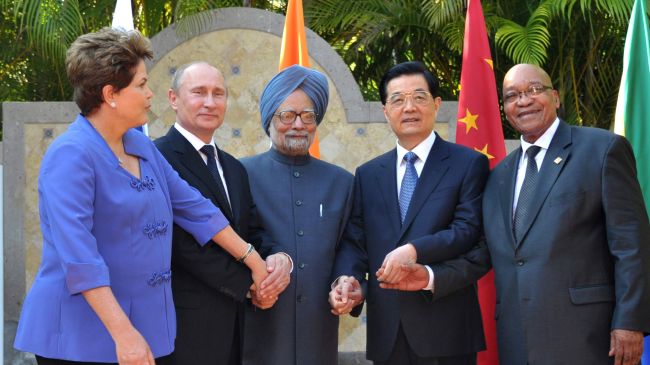
The BRICS (Brabricszil, Russia, India, China and South Africa) have announced that they will set up a “New Development Bank” (NDB) to fund economic development in their countries. The aim is to start with US$50bn of equal contributions in an infrastructure loan fund, to grow that over time, and to establish a US$100bn contingency reserves arrangement for financial/payments crises. The NDB stems i) partly from a frustration with the lack of reform at the World Bank/IMF in recognition of all the comparative and absolute economic change of the last few decades and ii) partly from a positive desire to develop new streams for the growing networks of economic interaction between and across the South. The stated intention is that other ’emerging’ economies could contribute and benefit from the NDB over time.

The NDB might well be an inherent ‘good’ for these countries and their partners. Anything that potentially supports sound, value adding, infrastructure development in these countries could be very welcome. There are, however, five main issues that will determine its success or otherwise.

1. Politics – how will the institution affect geopolitics? It could be highly divisive, adding to the worrying strains that already exist between North and South? Also, are these five contributors politically stable and aligned enough to be able to pursue their goals efficiently, effectively and honestly or are they going to fall out over the real world application of their aspiration?  Rule of law and a ‘free trade’ approach are vital ingredients to successful, long-term, economic development on this scale. Sadly, some BRICS do not always display these characteristics very well.

2. Economics – the countries vary so much in the scale and scope of their investment processes and they are competitors as well as partners – can they manage the stresses these differences imply?

3. Financial – why is the pooling of this money better than the spending of it individually? Will the infrastructure that is produced be better or worse (economically as well as physically) as a result? How will they handle the letting of contracts? There is a danger of circularity here: India donates funds to the NDB which is spent with Indian companies on Indian projects – why set up an institution in Shanghai to act as a middleman in this? Why not do it yourself? In essence, why would the sum of these parts make for better outcomes than the individual pots? They can do, but how is the NDB going make sure they do?

4. Practical – who is going to do the appraisal and evaluation of investment proposals and outcomes? There is a need for robust monitoring and surveillance of the projects and the funds. Why would this NDB be be better at that than any other parallel format? All the problems of an expensive bureaucracy, with the potential for corruption, could emerge.

5.  Relationships – is the NDB set up in competition or partnership with the IMF/WB and other bodies? Will it lead to separate funding streams that are vying for the same projects? Competition may be good but it can also be divisive and inefficient. Is China going to act as guarantor as, effectively, the USA has done for the Bretton Woods institutions for nearly 70 years? Will existing institutions now decline, disappear or become more of a ‘developed’ world club?

At this point, we can not answer these issues. Good intentions now need to be backed up with practical implementation. We will need to watch closely as the NDB is born, grows and matures.

Can contractual agreements deliver change in complex systems?

For me, the most exciting message coming out of the debates around complexity is that development agencies should focus less on planning and delivering pre-determined outputs, and more on understanding the system that they work in and the part that they could play in changing it. They should throw away detailed implementation plans, embrace iterative management, and merrily accept that they are just one of many factors contributing to change. This blog suggests that this way of working is inconsistent with the use of contractual agreements to deliver aid.

Most large donors are heavily reliant on contractors to implement their projects. These contractors typically commit to conducting activities and producing an agreed number of outputs, in exchange for money. This agreement is formalised in logical frameworks, contract agreements, or just scrawled on the back of an envelope. The donor monitors and manages these programmes against these activities and outputs. For example, DFID conducts annual reviews of each project and scores each output from A+ to C. (With B, inexplicably, being a fail.) This blog refers to any type of organisation managed through this relationship – whether NGO, government, or private sector.

This management style requires outputs to be clearly defined and fully attributable to the programme. It encourages implementers to focus on meeting these quantitative targets rather than broader development outcomes. It is difficult to change the targets and outputs, since the donor will inevitably suspect the contractor of trying to get out of what they promised.

This can work well when the project is to deliver pre-specified services. However, it is generally incompatible with any programme that seeks to influence complex systems. Quantitative results may not be easily specifiable – and any quantitative targets could set perverse incentives. For example, a requirement to reduce the incidence of malaria by 20% can incentivise a health provider to distribute bednets, rather than strengthening health systems. Activities and outputs are likely to change as the programme learns more about the system it works in and experiments with new approaches, making it very difficult to set targets up-front. Information asymmetries between the implementer and the donor make it very difficult for the donor to effectively manage this relationship. How do you know if the implementer is revising targets based on a greater understanding of their potential to leverage systemic agents of change, or if they’re just making excuses for bad performance?

Could we deal with this by improving our monitoring and evaluation systems? This is what I spend my life doing, so I’d love to say that the answer was yes. For example, we might hold contractors accountable to outcomes rather than outputs. In some cases (such as payment by results pilots) this seems to work – but I think will remain the exception rather than the rule. Outcomes typically are only partially attributable to programme activities, if at all. The donor will never really know if missed targets reflect poor implementation or other factors, and so will be unable to hold contractors accountable for them. Perhaps more significantly, a good monitoring system is fundamentally dependent on organisational culture. Staff must want the data they collect to be a fair reflection of their performance, and to have incentives to report on failures as well as successes. They must want to know when things are not going well, and how it can be improved. In a contractor-client relationship, where present and future jobs are at stake, that’s simply not going to happen.

So what can be done? There are some simple steps which could be taken; donor staff could (and should) spend more time managing projects, and staff should have a deeper understanding of the context, which would allow them to better make judgement calls regarding the responsibility of the implementer for success or failure. Perhaps more significantly, they could take evaluation findings to reflect on the implementer – not (as is currently the case) the project design.

However, I don’t think that’s enough. Ultimately, working in complex environments isn’t susceptible to a simple contractual agreement. Transforming social and economic systems isn’t the same as contracting out dustbin collection, or even direct delivery of healthcare services. Instead of managing contractors through activity or output-based contracts, donors need to select partners who share their values, and offer longer-term support to help them achieve their goals. This can be NGOs, governments, civil society, or direct delivery. It could even be the private sector – though it is unlikely to include profit-driven aid contractors. By paying more attention to the organisational culture and motives of implementing agencies, donors might move a step closer to some of their loftier ambitions.

P.S. Regular AidLeap readers (hi Mum!) might notice that this blog is a a mish-mash of two previous blogs– the Risks of Complexity and Why the Private Sector Shouldn’t Deliver Aid. Both sparked fascinating discussions which informed this post, so please continue that in the comments.

The Logframe of Love

For millennia, lovers have been struggling to cope with the complexity and challenges of relationships, without any evidence-based project cycle management tools to guide their way. Unaware of their killer assumptions and completely unable to monitor their progress, no wonder that the history of romance has been one long litany of failure.

With that in mind, we present our major contribution to humanity: the Aid Leap Logframe of Love.

Level Indicators Assumptions
IMPACT:A stable, happy, productive society.
  • Levels of violent crime
  • Consumption of anti-depressants
  • Suicide rates
  • Change in GDP
 
OUTCOME:More love in the world.
  • Rate of divorce
  • Number of Valentine’s Day cards sold
  • Amount of jewellery and roses purchased
  • People in a loving relationship have less reason to revert to crime.
  • No war, natural disasters, or recession.
  • Political stability.
OUTPUT 1: Couples successfully meet and date each other.
  • % of couples who make it to the fifth date (indicator of sustainability)
  • % of dates that end in a kiss
  • % of text messages that include xXx
  • Romantic films and music available.
  • Roses available in local markets.
  • Alcoholic beverages remain affordable.
OUTPUT 2: Couples have consensual sex.
  • Number of condoms sold
  • Frequency of bedsheets being washed
  • Sales of waxing strips (proxy indicator)
  • Sex will be enjoyable.
  • Pornography has not isolated sex from love.
  • Endorphins released during sex.
OUTPUT 3:Couples have babies.
  • Number of new-borns
  • % of baby nappies changed by women. (Gender-sensitive indicator)
  • % of public toilets that contain a baby changing facility
  • Babies do not produce too much bodily fluids.
  • Couples share responsibility for care.
  • Sufficient funds available for couples to cover baby’s needs.

Any major donors interested in funding this project should contact us on 0800-AID-LOVE.

DFID’s Private Sector Development Programme Receives Poor Rating from Aid Watchdog

ICAI have just released a report on private sector development, packed full of interesting nuggets and insights. It’s a great read, and we recommend that you go and read the report straight away. Just in case you don’t, we summarise some of the key conclusions, recommendations, and add our own thoughts below.

Three interesting conclusions from ICAI:

DFID’s ambition is ‘immense’, compared to what it can realistically achieve. DFID aims to transform economies and market systems, which are dependent on a load of factors which DFID can’t really do anything about. Instead, DFID “may need to adopt the role of a more modest partner, market convenor and intelligent customer”. It should be clearer about what value it can add as a development agency.

DFID is not fully considering the risks of private sector development. The authors applaud DFID for being prepared to take risks and innovate, but suggests that they need to better understand and manage these risks. Inadequate risk management may be related to DFID’s poor project management; existing processes (such as the business cases) ‘currently place too much emphasis on the initial project design and relatively little on supervision and learning’.

Simplistic targets can be counter-productive. The team note that current tools to monitor private sector development programmes are poor, as they do not account for the complex theories of change. In particular, targets can focus staff on ‘quick wins’ at the expense of longer-term changes.

ICAI’s Recommendations:

Recommendation 1: DFID should clearly define and articulate where it can add most value in PSD relative to other stakeholders. It should be more realistic in its ambitions and the impact it seeks to achieve.

Recommendation 2: DFID should provide clearer guidance to its staff on how to design a coherent and well-balanced PSD country portfolio that matches its goals for an end to extreme poverty through economic development and transformational change.

Recommendation 3: DFID needs better to calibrate and manage the risks associated with PSD and so innovate in a more informed fashion.

Recommendation 4: DFID needs to work harder to understand the barriers and business imperatives faced by the private sector in participating in development. Wherever it operates, DFID needs to be clear how and where its interventions can address these barriers

Our comments:

How much ambition is right? DFID is criticised throughout the report for being too ambitious, relative to what it realistically can achieve. But do we not want ambition? If DFID listed its ultimate goal as ‘slightly increasing income for a few people, probably’ would we criticise it for a lack of ambition? Obviously there’s a thin line between ambitious stretch targets and outright stupidity, but it’s not clear to me where the balance should lie.

How should results be measured? The potential negative effect of simplistic targets is an important finding, and we’ve discussed the ‘evidence agenda’ on this blog before. However, the report is less clear on what the solution could be – and the recommendations don’t directly address monitoring. There’s a tentative suggestion of an ‘assessment of the cumulative impact of a balanced PSD portfolio on the private sector’ in each country. I don’t really understand what such an exercise would look like, or whether it could realistically produce interesting findings given the huge problems of attribution and scale.

Easy, big spender. DFID’s rapid scale-up in private sector development is a concern, and one left largely untouched in the report. At its best, private sector development should require relatively little money. Flooding the private sector with money can have quite marked negative effects, as incentives are distorted and inclusive business suddenly becomes less profitable than chasing donor-driven initiatives. Is DFID’s spend in this area appropriate?